Salaeng-Ngaeng Takrut "Saneh Thong Do"
09/09/2026
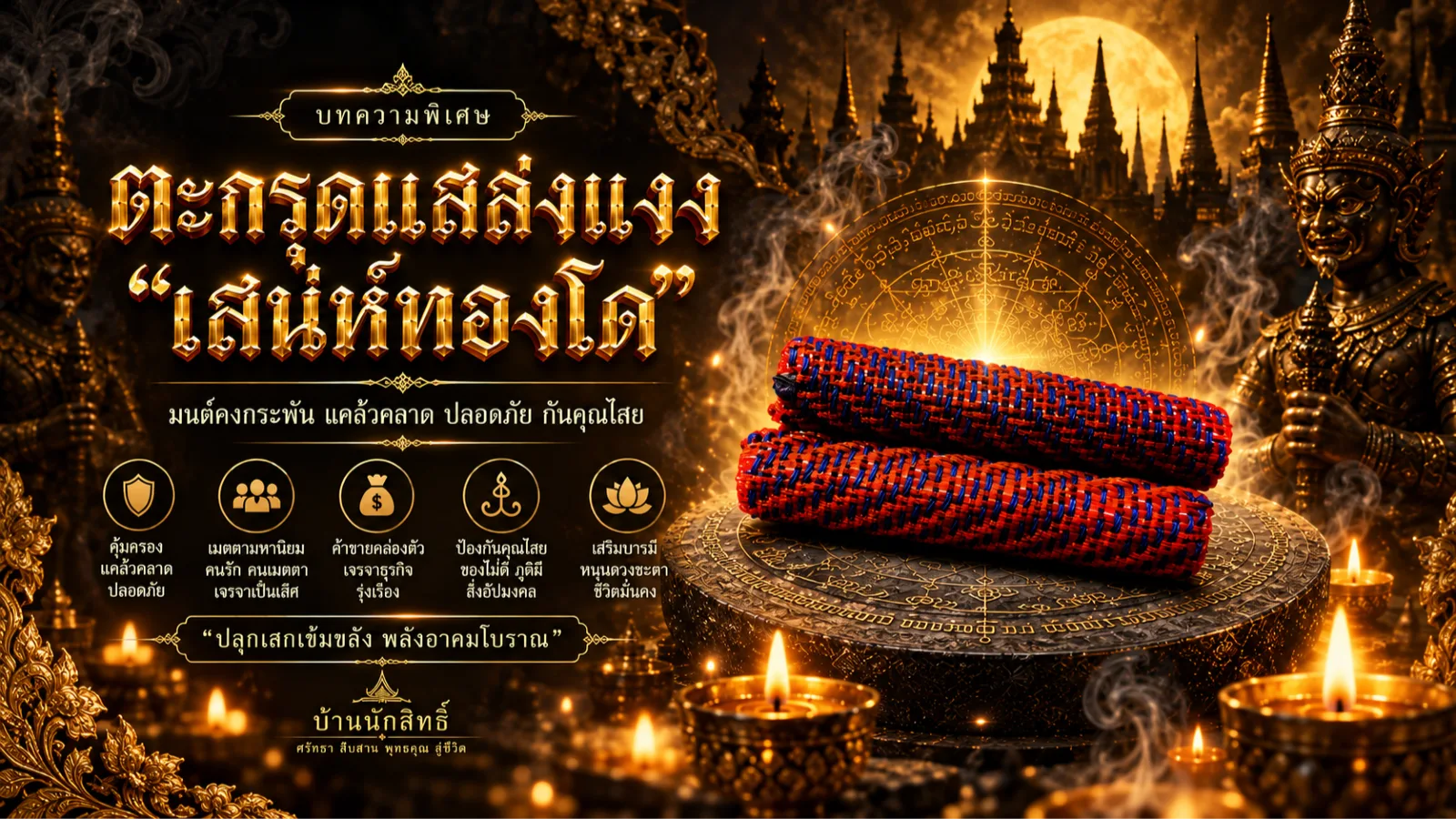
Two lineages of practice, one amulet — loving-kindness, attraction, commerce and invulnerability
"Salaeng-Ngaeng" (แสล่งแงง) is one of the old amulet traditions passed down through several master lines, each with its own details, methods of use and distinctive character of practice.
The maker of this takrut edition studied the Salaeng-Ngaeng tradition under masters of several lines and has previously created amulets of this tradition in various forms. Some manuscripts are highly particular — in their manner of construction, their empowerment and the observances required of the wearer — and so have never been widely published or produced in quantity.
One line of particular interest is the "Takrut Phat Salaeng-Ngaeng" (ตะกรุดผัดแสล่งแงง), transmitted from a Tai Yai master. It resembles a Takrut Maharut, may be used according to various observances, and requires preparatory practice before wearing that differs from the more common lines.
Two aspects — two sides within one tradition
More interesting still, when one studies Salaeng-Ngaeng manuscripts from several lineage houses, the core of the tradition appears to hold "two sides" within a single body of practice.
One side is the martial side — invulnerability, avoidance of harm and protection.
The other is the side of charm — loving-kindness, attraction, negotiation and commerce.
The martial side of Salaeng-Ngaeng
The Salaeng-Ngaeng manuscripts found in most lines lean toward beliefs concerning invulnerability and self-protection, containing many incantations and accounts relating to weapons, combat and escape from harm.
In earlier times, therefore, Salaeng-Ngaeng was favoured among those who lived with risk — fighting men, or those who had to travel through dangerous places.
Accounts survive from several master lines: the testing of amulets with weapons, the application of yantra to the body, or the experiences of masters of the past which their disciples believed to be connected with invulnerability and deliverance from harm.
These accounts are matters of traditional belief and experience handed down within the lineage. They are not to be tested with weapons or in genuinely dangerous situations.
Why, then, does Salaeng-Ngaeng also have a side of loving-kindness and attraction?
This is a question that students of the tradition have long wondered about.
Although a great many of the principal manuscripts speak of invulnerability, those who have worn or inherited Salaeng-Ngaeng amulets tell no small number of stories concerning popularity, charm, negotiation and trade.
Some lines hold observances for carrying the takrut to "find a patron" or to "court a woman", while other lines — such as the Wat Sam Ngam (วัดสามง่าม) line — preserve accounts of Salaeng-Ngaeng yantra cloth used for purposes of attraction, giving rise to the saying:
"Tie it to the thigh and go courting."
Certain groups of incantations are also found to be of the kind that call to the mind and heart, evoking affection and attraction — particularly those verses that speak of love, popularity and commerce.
Later, another ancient manuscript line came to light whose wording turns clearly toward affection, loving-kindness and trade, showing that the character of Salaeng-Ngaeng may not be confined to invulnerability alone but is rather "twofold": both the martial and the compassionate aspects held within one lineage of practice.
The origin of the name "Saneh Thong Do"
This takrut edition takes the name "Thong Do" (ทองโด) from one of the inheritors of the Salaeng-Ngaeng tradition, in remembrance of the holder of that line and so that the master's name should not be lost to time.
According to the lineage's account, "Por Thong Do" (พ่อทองโด) was a man of the Isan region who once travelled down to work in central Thailand and came to stay in Suphan Buri province.
During that time he saw young men of the locality carrying a takrut renowned for invulnerability. His interest aroused, he sought out and asked to study the tradition from Luang Pu To of Wat Tham Mi (หลวงปู่โต๊ะ วัดถ้ำหมี), a master renowned for amulet lore in that line.
When Por Thong Do returned to his homeland, he used the knowledge transmitted to him to make takrut for those close to him, and stories arose concerning courage, invulnerability and personal standing, until his became another Salaeng-Ngaeng line spoken of among students of the tradition.
The tradition was later passed on through Por Thong Do's disciples before reaching the maker of the present edition, who, with the intention of "reviving and honouring the master", took the name "Thong Do" as the name of this takrut edition:
"Salaeng-Ngaeng Takrut, Saneh Thong Do"
thus setting down a record of the master's name and the source of the tradition.
Two manuscripts, two characters of practice, in a single edition
What is distinctive about the Salaeng-Ngaeng Takrut Saneh Thong Do is the bringing together of knowledge from two directions.
1. The line of loving-kindness, attraction and commerce
Following the Salaeng-Ngaeng manuscripts in which wording is found concerning
popularity and loving-kindness
attraction
the affection and goodwill of others
negotiation and dealings
trade
people drawing near
calling to the mind and heart
This is what the old people called the "side of charm".
In the context of old Lao usage, the word "chao chu" could also denote a man of charm, loved and well regarded by others; it did not refer only to inconstancy in love.
2. The line of invulnerability and protection
The other side draws on the Salaeng-Ngaeng Thong Do line, transmitted in the direction of invulnerability, deliverance from harm and protection.
This is a character of practice that in earlier times was favoured among those who sought courage, confidence and something to hold to when facing situations of risk.
This edition was therefore made with the intention that it be
"charm and valour in a single takrut"
that is, holding both the aspect of loving-kindness and attraction and the aspect of protection, according to the beliefs of the Salaeng-Ngaeng tradition.
The making
For the Salaeng-Ngaeng Takrut Saneh Thong Do the maker inscribes each takrut by hand, one at a time, before it is bound in the prescribed pattern. For this reason the edition is produced to order rather than in quantity.
The guiding thought is:
"Do not let the master's tradition become a mass-produced thing."
Each piece therefore arises from inscription, preparation and observance of the steps of the lineage of practice as it was transmitted to the maker.
Qualities according to the beliefs of the tradition
Loving-kindness
popularity and loving-kindness
the affection and goodwill of others
support in human relations
greater confidence in meeting people
Attraction
support for personal charm and bearing
conversation and negotiation
drawing attention
support for relations between people
Commerce
support in business negotiation
ease in trade
customers drawing near
suited to those working in sales and service
Protection
deliverance from harm
protection
greater confidence
something to hold to in mind when travelling or facing various situations
These qualities are beliefs handed down within the amulet tradition. They are not a guarantee of results, and the piece should not be used to test against weapons or dangerous situations.
To order
This takrut edition is made to order. Details and enshrinement are available on the product page.